Dubai Real Estate: Why Investors Remain Confident Despite the Crisis
Despite recent Middle East tensions, Dubai’s real estate market remains supported by strong fundamentals, resilient demand, and a proven history of recovery.
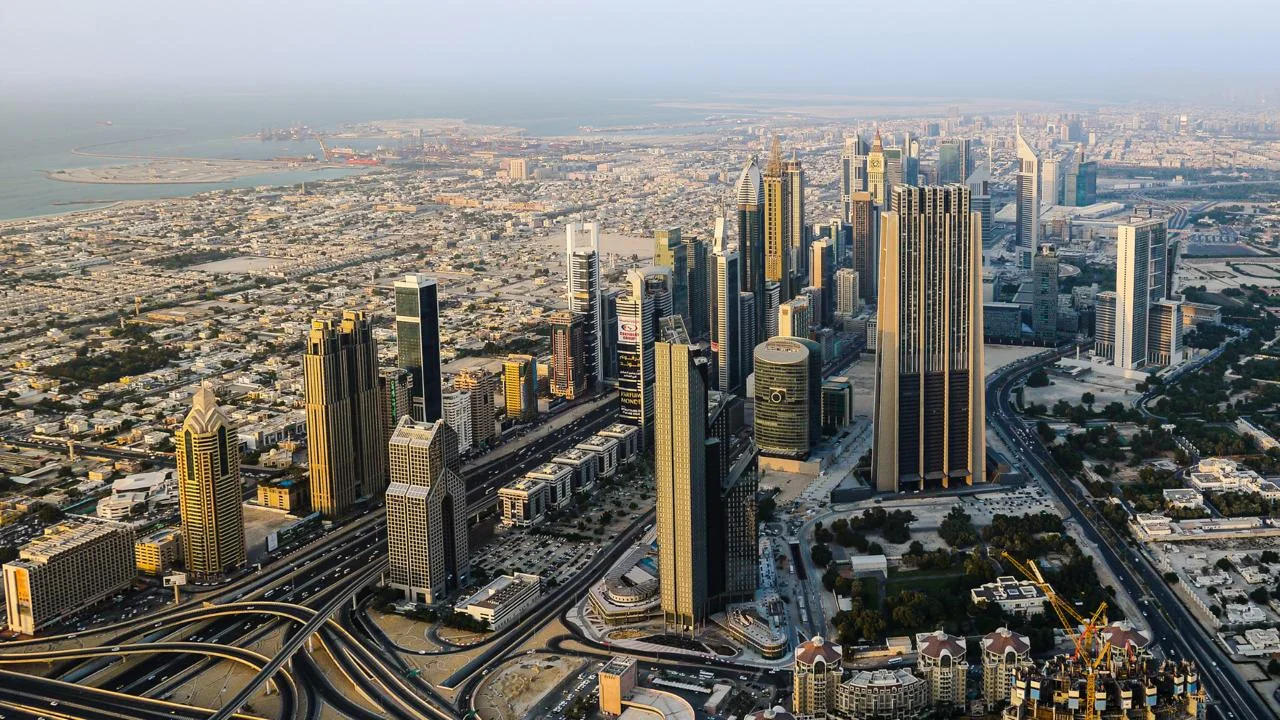
Dubai’s real estate sector has long been synonymous with safety and global appeal, frequently appearing on the list of the world’s safest cities. However, recent circumstances and the conflict in the Middle East have raised questions among investors and the broader real estate community.
How safe is Dubai in general? Should we be worried about the future of this majestic city that has once been praised as the “Switzerland of the Middle East”?
Putting the Recent Crisis into Context
In the aftermath of the Iranian missile crisis, it’s essential to view the situation in proper context.
The UAE is not a direct party to the conflict. The limited damage reported in Dubai appears to have resulted from falling debris rather than direct missile strikes, indicating that air defense systems were able to intercept many of the incoming objects—despite this being the first time the country has faced such a situation.
The UAE continues to maintain one of the strongest and most technologically advanced militaries in the region, supported by a government known for rapid and highly coordinated responses to regional tensions. This combination of neutrality and strategic capability has long been a cornerstone of the nation’s stability.
Strong Fundamentals Continue to Support Dubai
While the incident naturally caused a moment of concern among international investors, Dubai’s real estate market remains anchored by solid fundamentals, including:
- A diversified economy
- Sustained population growth
- World‑class infrastructure
- A global reputation as a safe, tax‑efficient hub for business and lifestyle
Developers are financially stronger than in previous cycles, prime communities continue to show resilience, and demand from long‑term investors remains intact.
Although short‑term caution is understandable, the broader outlook for Dubai property is still defined by confidence, structural strength, and the UAE’s proven ability to navigate regional challenges without compromising its growth trajectory.
What Does This Mean for Dubai’s Real Estate Market?
Is there a reason to worry about the trajectory of the UAE’s real estate market?
While the conflict understandably caused a moment of uncertainty, investors should not interpret this as a sign that Dubai’s real estate trajectory is in jeopardy. According to Allsopp & Allsopp (2026), investors continue to sign off-plan agreements, and significant changes in prices per square foot are not expected.
Lessons from Past Crises
Past geopolitical and global events demonstrate Dubai’s ability to recover—often emerging even stronger.
- 2008 Financial Crisis: Markets dropped by around 50%, yet rebounded by more than 100% in the following years.
- COVID-19 Pandemic: A relatively modest decline of about 10%, followed by a strong recovery of roughly 60% by 2022.
- 2024 Dubai floods: Minimal impact, with transaction activity actually increasing by 38% compared to the previous quarter.
Based on these precedents, today’s uncertainty is strongly expected to follow a similar trajectory.
While caution is natural in the immediate aftermath of geopolitical events, Gulf News (2026) states that the broader market trajectory remains stable, supported by fundamentals far stronger than any temporary volatility.
Sources: The National News (2026), Gulf News (2026)
Related Articles