Dubai Design District (d3): Why This Emerging District Could Become One of Dubai’s Most Interesting Investment Stories of 2026
Discover why Dubai Design District (d3) is poised to be a top investment opportunity by 2026.
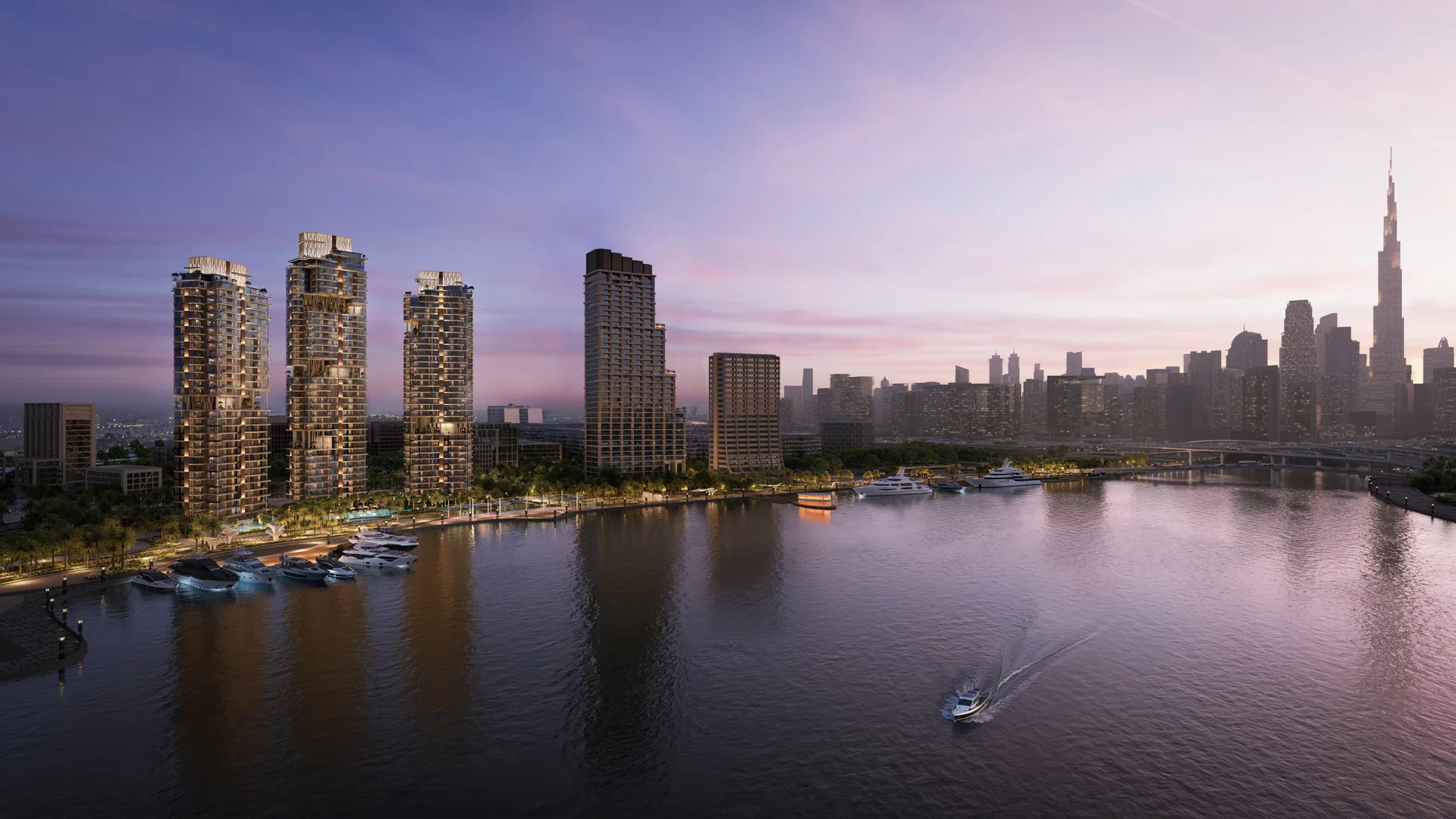
Dubai’s most compelling real estate opportunities rarely look obvious at the beginning. They tend to emerge at the intersection of location, timing, and long-term urban strategy, long before pricing reflects full maturity. One district that currently sits precisely at this intersection is Dubai Design District (d3). As Dubai enters a more selective phase of its real estate cycle, districts that combine central positioning, lifestyle integration, and phased development are increasingly standing out. d3 is one of them.
What is Dubai Design District (d3)?
Dubai Design District (d3) was originally conceived as Dubai’s dedicated creative and design hub, created to support industries such as fashion, design, architecture, media, and creative technology. Developed as a master-planned district by TECOM Group (Dubai Holding), d3 has, until recently, been dominated by offices, showrooms, galleries, event spaces, and F&B concepts. What is changing now is its residential dimension and that shift is structurally important. The residential chapter of d3 is being delivered by Meraas, another Dubai Holding developer known for building some of Dubai’s most recognisable lifestyle-led districts.
Where is d3 located and why does that matter?
d3 sits in one of Dubai’s most strategic central corridors:
- Directly next to Business Bay
- 5–10 minutes from Downtown Dubai and Burj Khalifa
- Close to DIFC and Dubai Mall
- Along Ras Al Khor Road (E44), ensuring strong connectivity
This places d3 between Dubai’s primary employment and lifestyle hubs, making it highly relevant both for end users and for professional tenants working in surrounding business districts. In real estate terms, this is not an edge location waiting for future demand, it already sits inside demand.
A shift in tenant behaviour: quality over legacy stock
Downtown Dubai remains one of Dubai’s strongest and most liquid residential markets. However, much of its housing stock was delivered between 2007 and 2013. As buildings age, tenant preferences evolve. Across global cities, and increasingly in Dubai, tenants now prioritise:
- Modern layouts
- Upgraded building standards
- Better amenities
- A stronger sense of community
This has created a spillover effect, where professionals working in Downtown and DIFC look for nearby alternatives that offer higher quality living without sacrificing accessibility. d3 sits directly in the path of this shift: close enough to serve Downtown-based occupiers, yet new enough to outperform legacy stock on design, lifestyle, and long-term relevance.
Timing: why district lifecycle matters
In master-planned districts, timing often matters more than the asset itself. Historically, early residential phases in well-located districts tend to be priced at a relative discount. As infrastructure is delivered, amenities open, and community depth grows, pricing evolves alongside risk reduction. Developers manage this process through phased launches, ensuring gradual absorption and price progression rather than oversupply. Dubai Design District is still in the early phase of its residential transformation, transitioning from a predominantly commercial hub into a mixed-use destination. That places it earlier in its lifecycle than districts that are already fully priced as “established.”

Entry pricing and ticket size
At this stage, residential entry pricing in d3 is positioned at early-phase levels, with indicative pricing around AED 2,800 per sq ft, based on initial developer guidance and minimum unit sizes. The entry budget starts from approximately AED 2.1 million, which translates to roughly EUR 520,000–540,000 depending on exchange rates. This positions d3 in the prime but still accessible segment of central Dubai — below ultra-prime thresholds, yet within districts that historically demonstrate stronger long-term demand resilience. For larger investors, the district also offers the potential for:
- Bulk acquisitions
- Full-floor positions
- Concentrated portfolio allocations within a single project
Waterfront adjacency: a rare central-city combination
Another distinctive feature of d3 is its waterfront setting, combined with immediate proximity to the Ras Al Khor Wildlife Sanctuary. In central urban environments, access to water and natural buffers is scarce by definition. When it exists, it tends to enhance:
- Liveability
- Perceived quality
- Long-term tenant appeal
This “nature-meets-central-city” dynamic makes d3 particularly attractive to both end users and long-term tenants seeking balance between proximity and lifestyle.
What history can tell us: City Walk as a comparable case
To understand how such districts evolve, it’s useful to look at City Walk, another Meraas-developed mixed-use district. City Walk represents a completed version of what d3 is structurally becoming today: centrally located, lifestyle-driven, and delivered in phases. Public transaction data shows that early-stage buyers in City Walk who held through district maturation often achieved substantial ROE, while later transactions reflected pricing consistent with a fully established market. The lesson is not that returns were guaranteed — but that timing within the district lifecycle played a decisive role.
Risk awareness matters
As with any early-phase opportunity, outcomes depend on:
- Market cycles
- Holding period
- Unit selection and release phase
- Exit conditions
This type of opportunity is therefore not suited to investors seeking guaranteed short-term outcomes or fully stabilised assets. It is better aligned with investors who understand how value is created through structure, timing, and patience.
Why d3 deserves attention now
Dubai Design District shares the same core structural fundamentals seen in successful districts before it: central location, phased delivery, integrated mixed-use planning, and strong developer execution. What differentiates it today is where it stands in its lifecycle. d3 is at a stage where the narrative is forming, not yet fully priced in. Comparable districts demonstrate that once residential supply is fully launched and absorbed, pricing reflects maturity rather than potential.
The purpose of analysing d3 at this moment is not to select units, but to understand whether the structure, timing, and positioning align with long-term investment objectives.
Sometimes, the most important investment decision is not what you buy, but when you decide to pay attention.
Monika Kalicinska, CEO Inani real estate
Related Articles